Cool Tips for Hot Days
Climate change and rising summer temperatures pose a threat to many people’s health. With a few measures such as insulating the building envelope and installing airtight windows, you can effectively protect your home from overheating. Make sure, however, to use only low-emission products inside your home.
As temperatures are expected to rise in the long term, it is imperative to provide adequate protection against summer heat for both residential and commercial buildings – for the sake of comfort and for health reasons. Despite their cooling effect, fans and air conditioners are not the best solutions, as they often cause colds and muscle tension – not to mention the energy consumption of these appliances. Often, there are more effective ways to protect indoor spaces from overheating. First, we must take a closer look at the architecture. Do facades really need to be as transparent and glazed as possible? Prof. Thomas Auer of the Technical University of Munich advocates “appropriately dimensioned windows and ceiling heights”. By using tall, narrow windows, rooms with higher ceilings allow more light to enter the deeper parts of the room. Thanks to the window area accounting for less than 20 percent of the facade, there is no need for solar shading, which usually constitutes a classic thermal bridge. Nevertheless, good natural lighting is achieved.
If you still want to go for large glass surfaces, you can protect the interior from overheating with a roof overhang. In summer, when the sun is high in the sky, it helps to keep the heat outside. The low angle of the winter sun, by contrast, can generate solar heat gains inside. Balconies can have a similar effect. In addition, or as an alternative, special sun protection measures ensure that indoor spaces remain at a comfortable temperature during the summer months. Roller shutters, Venetian blinds, folding shutters or awnings provide protection from excessive sunlight. This is particularly important for roof windows or skylights. Shading devices can be conveniently lowered and raised with the help of motors and automatic timers. Modern solar-powered drives also help save electricity.
In general, windows and fixed glazing must feature good insulation properties. Consumers should note that the insulation value of the glass is not the same as the insulation value of the entire window assembly. Modern windows are highly complex systems that consist of multiple components. Whether installed in new-builds or used for replacing windows in existing buildings: triple glazed windows with good insulation properties are standard today. Consumers also have the option of installing special solar control glass. An innovative solution is so-called “smart glass” (or switchable glass), in which the pane changes from clear to tinted within a few minutes, while maintaining transparency. Coating glass panes with a special film can also prevent excessive heat gains. Furthermore, a well-insulated building envelope helps prevent heat stress. Insulating the facade, the roof, or at least the top floor ceiling has a positive effect on the indoor climate. Provided there is sufficient ventilation – either manually or via a controlled residential ventilation system that ensures automatic air exchange.
Whether new or old buildings: When upgrading the energy efficiency of a building, especially when providing for summer heat protection, a wide variety of products and materials are used. Often, wall and floor coverings are also replaced as part of modernization projects. Materials used in these projects include parquet and tile adhesives, grouts, plasters and paints. Many of these building materials have a direct impact on the indoor climate and thus on the residents’ health. Consumers should therefore always ensure that the selected materials have been certified to be safe for health in order to avoid indoor air pollution from harmful substances. They should discuss this point with the contractor well in advance of awarding the contract.
We recommend using products that show the EMICODE® seal on the packaging. The seal is awarded by the GEV, the German Association for the Control of Emissions in Products for Flooring Installation, Adhesives and Building Materials. Products certified with the EMICODE® label have been tested for VOC emissions by independent laboratories in special test chambers. In the field of heat protection, these products include thermal insulation materials, vapor barriers, joint sealants and precompressed sealing tapes. To ensure long-term compliance with the predefined limit values, the initial test is followed by regular unannounced spot checks that are carried out by independent experts and testing institutes. The EMICODE® label must be re-applied for after five years at the latest.
Consumers enjoy multiple benefits when they choose EMICODE®-certified products. With the right insulation products, they protect the interior of their homes from overheating in summer. In winter, they also keep the cold outside while at the same time reducing heating energy consumption. This not only saves money but also benefits the environment. In addition, home owners and residents ensure that the indoor air is free from harmful substances.
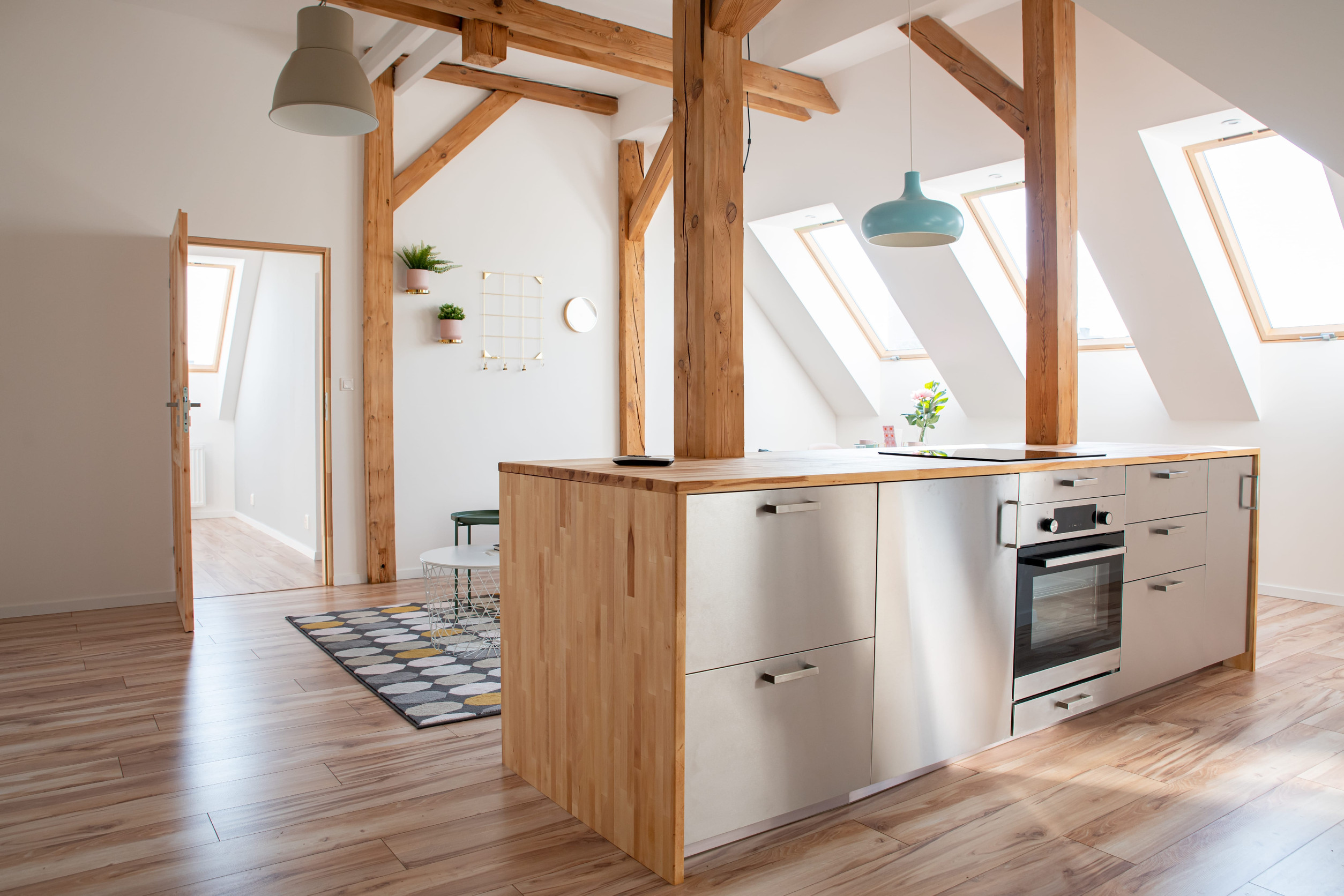
Photo: © djedzura/123rf/GEVGEV
Attic rooms are quite popular. In summer, however, they heat up significantly if thermal protection is insufficient. In addition to good insulation, triple-glazed roof windows equipped with awnings or roller shutters are recommended. Light and rain sensors control the opening and shading of windows, thus ensuring even more comfortable temperatures when the sun is out.
Do You Have Questions?
If you have any questions on certain topics or want to contact us for another reason,
please contact us by phone or email.
Phone: +49 (0)211 843 449 – 01
info@emicode.com
Share article on Social Media: