Architect’s Tip: Build simply, live healthily – at reasonable costs
Building in an eco-friendly way, saving costs, and living in a healthy environment – Prof. Thomas Auer from the Technical University of Munich explains how this is possible. In addition, he encourages us to rethink the concept of “comfort”.
Current architecture is too complicated. 95 percent of today’s buildings do not work as planned. In many cases, the technical effort involved is totally disproportionate to the energy savings achieved. The German Buildings Energy Act (GEG) in its current version and the proposed Building Modernization Act (GMG) place too much emphasis on precalculated energy demands. Construction must be simplified, and the entire life cycle of a building must be taken into account – including “gray energy”. Gray energy is the amount of energy required for the manufacture, transportation, storage, sale and disposal of building products.
Tip 1: Choose technically simple designs
As part of the “Building Simply” research cluster, the Technical University of Munich built research houses with a deliberately simple design that meet only the minimum energy requirements of the GEG. They have shown that low-tech architecture works – regardless of whether brick, wood or lightweight concrete are used as construction materials. Five out of six apartments consumed less energy than predicted. Key design principles that should be followed include: single-layer wall and ceiling constructions, sufficient thermal mass to compensate for hot and cold spells, and the consistent separation of the building from its technical systems.
Tip 2: Properly dimension room height, window size and natural lighting
Other factors of crucial importance are appropriately dimensioned windows and room heights. High-ceilinged rooms equipped with tall, narrow windows let more light enter the deeper parts of the room. This means that less facade area is required in relation to the floor space, which has a positive effect on the indoor climate in both summer and winter. Another advantage: Thanks to the relatively small proportion of window area on the facade, there is no need for solar shading, which usually constitutes a classic thermal bridge. Nevertheless, good natural lighting is achieved.
Tip 3: Install pipes and wires on the plaster
In many cases, a floating screed (e.g. for accommodating underfloor heating) is not necessary. Instead, plumbing and electrical lines can be visibly installed on the plaster (wall-mounting). If cleverly designed, the pipes and wires do not negatively affect the appearance of the room.
Tip 4: Make sure emissions are as low as possible
Today, many buildings are found to have alarming levels of VOCs (volatile organic compounds), which are considered to be hazardous to human health. To create healthy living spaces, only low-emission products should therefore be chosen. This is guaranteed by using, for instance, building products that have been granted the EMICODE® license. These products contain neither solvents nor phthalate-based plasticizers and are free of harmful VOCs. The GEV, which is the German Association for the Control of Emissions in Products for Flooring Installation, Adhesives and Building Materials, awards the EMICODE® label only to products whose safety for human health has been verified through rigorous laboratory testing. Manufacturers must subject their products to regular unannounced spot checks carried out by independent test institutes. They are only allowed to advertise their products with an EMICODE® seal if this is renewed after 5 years at the latest.
Tip 5: Avoid unnecessary complexity
Simplification is the name of the game – not only technically, but also in terms of comfort. Less is sometimes more. It would, for instance, be a mistake to assume that air-conditioning leads to fewer physical complaints – only to different ones. Why not try a little bit of “healthy discomfort” – a healthy dose of sacrificing some comfort?
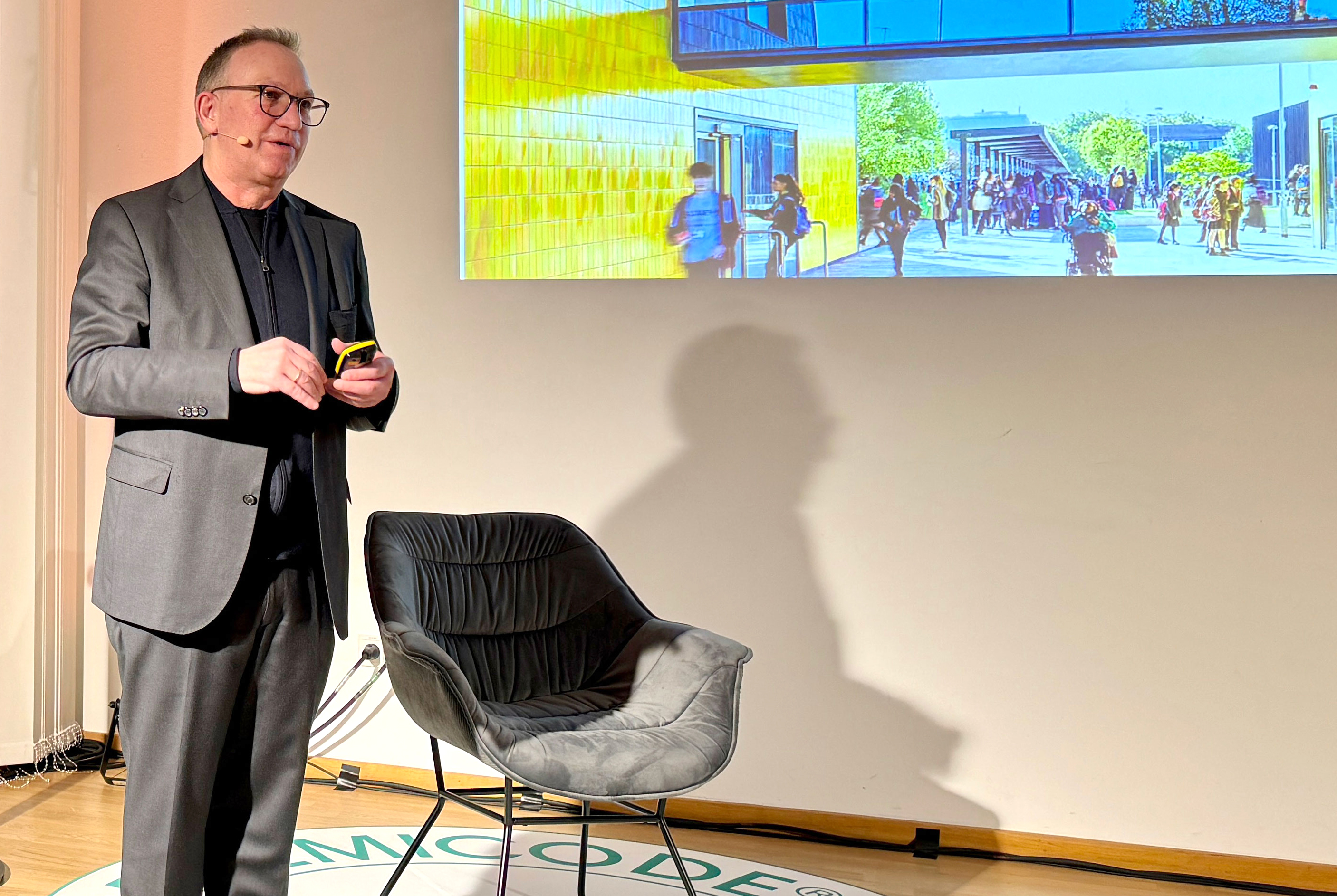
Photo: GEV/Stefanie König
Do You Have Questions?
If you have questions about specific topics or if you would like to contact us for any other reason, feel free to contact us by phone, fax or e‑mail.
Phone: +49 211 / 67931–20
Fax: +49 211 / 67931–33
info@emicode.com
Share article on Social Media: